"I'll Get Back to You" Is Sales Code for "No" - Here's How to Stop Losing the Deal
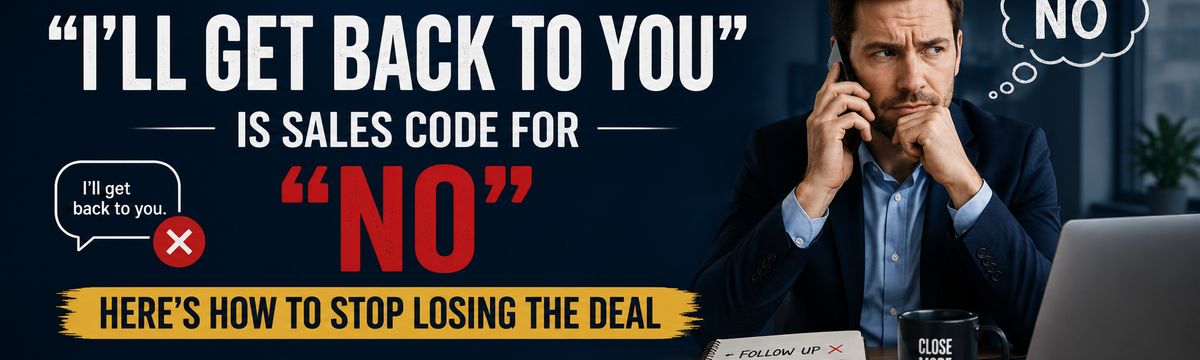
If you've been in sales for more than a week, you've heard it:
"This all sounds great. Let me get back to you."
It sounds polite. It sounds like progress. It is neither.
In most cases, "I'll get back to you" isn't a pause button — it's a soft no. The prospect doesn't want to commit, and they don't want to say no to your face, so they hand you a phrase that lets everyone leave the call feeling fine. You feel good because the deal isn't dead. They feel good because they didn't have to be the bad guy. Everyone wins — except the deal, which quietly goes to die in your CRM under a tag like "follow up later."
The Two Ways Reps Get This Wrong
When a prospect says it, most reps do one of two things, and both lose the deal.
Option one: they panic and start objection-handling. They scramble to defend the price, re-pitch the features, or stack on urgency. This usually backfires — it reads as pushy, and it pressures someone who has already told you they're not ready to decide.
Option two: they accept it at face value and end the call. "Sounds good, talk soon!" Then the lead disappears. Not because they said no — because nothing was actually scheduled, nothing was actually clarified, and there's no reason for them to ever think about you again.
The fix isn't to push harder or to back off completely. It's to do two specific things before you hang up — and neither of them feels like selling.
Step 1: Get Them to Commit to a Timeline
The goal here isn't to extract a yes. It's to turn a vague stall into a scheduled follow-up that they set.
Say this:
"No problem at all. How much time do you need to get back to me?"
This question does something subtle but important — it assumes the conversation is continuing, and it hands the prospect control over the timing. People are far more likely to honor a date they picked themselves than one you impose on them.
They'll typically respond with something loose:
"Give me a couple of days."
Don't just say "okay" and move on. Lock it in out loud:
"Great, I'll follow up with you in a couple of days. I'll put it on my calendar."
That last line matters more than it sounds. You're not just agreeing to follow up — you're telling them you're treating this as a real commitment, not a hope. It puts gentle social pressure on the timeline without saying a word about pressure.
Most reps skip this entirely. They hear "I'll get back to you" and let it sit there, unscheduled. Two weeks later the lead has gone cold, and nobody can say exactly when or why. A specific time isn't a formality — it's what keeps the deal breathing.
Step 2: Surface the Real Concern Before the Call Ends
A timeline alone isn't enough. You also need to know what they're actually going to be thinking about during those "couple of days" — because "I'll get back to you" is almost never about needing more time. It's a stand-in for a concern they haven't said out loud yet.
Say this:
"Before we wrap up, what were you wanting to go over in your head?"
This question works because it's not an objection-handling question — it doesn't sound like you're trying to talk them out of hesitating. It sounds like you're trying to help them think clearly. That distinction is what gets people to actually answer honestly.
They'll usually tell you straight:
"I just need to think about the budget."
Now you're not walking into your next call blind. You know exactly what's standing between them and a yes — and you have days to think about how to address it, instead of finding out cold on the next call and having to improvise.
Why This Combination Works
Each step solves a different problem:
- The timeline keeps the deal from going stale and gives you a legitimate, expected reason to reach back out — instead of chasing someone who's gone quiet.
- The real concern turns your next conversation from a generic "just checking in" call into a targeted one that's actually built to close.
Used together, you walk into the follow-up already knowing when to call and what to say. The close is largely done before the call even starts — you're just executing on information they handed you for free, simply because you asked two short, non-pushy questions before letting them go.
Try It on Your Next Call
Next time a prospect says "I'll get back to you," resist both urges — don't pitch harder, and don't let them go quietly. Ask for the timeline. Ask what's on their mind. Then follow up exactly when you said you would, on exactly the concern they told you about.
It takes fifteen extra seconds on the call. It can be the difference between a deal that closes and one that just disappears.
